Best Ways to Reduce Monthly Expenses Without Changing Your Lifestyle
The easiest savings don't come from spending less on the things you enjoy. They come from paying less for exactly the same things.
In this article
Most advice about cutting expenses is really advice about going without: skip the coffee, stop eating out, cancel the holiday. That works for about three weeks.
There's an easier kind of saving that asks for no sacrifice at all. You keep the same phone, the same internet, the same shows, the same cool room in May. You just stop overpaying for them. Fixed and recurring costs are where this money hides, because they're set up once and rarely looked at again.
Pay less for the same thing before you consider using less. Review recurring bills once a year, one at a time, and look for right-sized plans, annual pricing, avoidable fees and forgotten renewals.
Start with a list of recurring costs
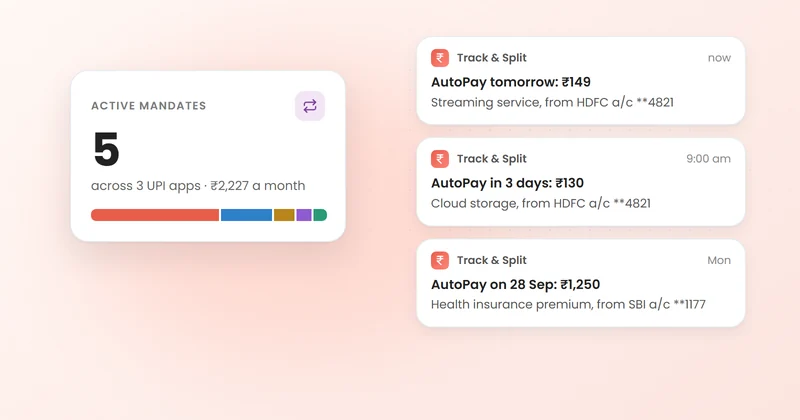
You can't review bills you haven't listed. Go through last month's bank and card statements and write down everything that repeats: rent, EMIs, insurance, phone and internet, electricity, gas, OTT and apps, gym, society maintenance, school fees. Include AutoPay mandates, which are easy to miss; our UPI AutoPay guide shows where to find them.
Then work through the list below.
Phone, internet and streaming
Right-size your mobile plans
Check your actual data use in your phone's settings for the last three months. If you use 1 GB a day on a plan with far more, a smaller plan gives you the same experience for less. Compare the per-month cost of longer-validity and annual plans, which are often cheaper than renewing monthly.
Look at broadband and OTT together
If you pay for broadband and several streaming services separately, see whether a broadband plan that includes the services you already watch costs less than the sum. Only count services you'd pay for anyway; a bundle full of apps you don't open isn't a saving.
Rotate streaming services
Few people watch four platforms every month. Keep one or two, and switch the others on for the month a show you want is released. Same shows, fewer overlapping subscriptions.
Electricity
- Set the AC to 24°C. India's Bureau of Energy Efficiency recommends it as the default, and each degree lower makes the AC work harder. Use a ceiling fan with it.
- Service the AC before summer. Clean filters help it cool properly without running longer.
- Put the geyser on a timer instead of leaving it on.
- Check star ratings when replacing appliances. The BEE star label lets you compare running costs, not just purchase price.
- Switch off standby loads like set-top boxes and microwaves at the plug overnight.
Groceries and household
You don't need to buy different food. You need to buy the same food differently:
- Buy staples monthly in larger packs where the unit price is lower: atta, rice, dal, oil, detergent.
- Compare price per kg or litre, not the pack price.
- Keep quick commerce for real gaps. Small top-up orders tend to add fees and extra items.
- Plan a week of meals so vegetables get used rather than thrown out.
Banking, cards and fees
Fees give you nothing back, which makes them the purest saving on the list:
- Close or consolidate accounts that charge you for missing a minimum balance.
- Pay credit cards in full, before the due date. Interest and late fees are expensive.
- Check card annual fees and whether your spending qualifies for a waiver; if not, consider whether the card is worth keeping.
- Never withdraw cash on a credit card; charges and interest usually apply from day one.
- Move mandate dates to just after salary day to avoid failed-payment charges.
Insurance and loans
These are large, recurring and rarely reviewed. Handle them carefully: the goal is to pay less for the same protection, never to reduce cover you need.
- Pay premiums annually if you can. Monthly or quarterly premium options often cost more over the year than a single annual payment. Set aside the monthly equivalent in a sinking fund.
- Compare at renewal, not in a panic. Look at cover, exclusions and waiting periods as well as price.
- Check your loan interest rate periodically. If you have a floating-rate loan, ask your lender what rate new borrowers are getting and what switching would involve.
- Consider prepaying expensive debt with bonuses, after checking any prepayment terms.
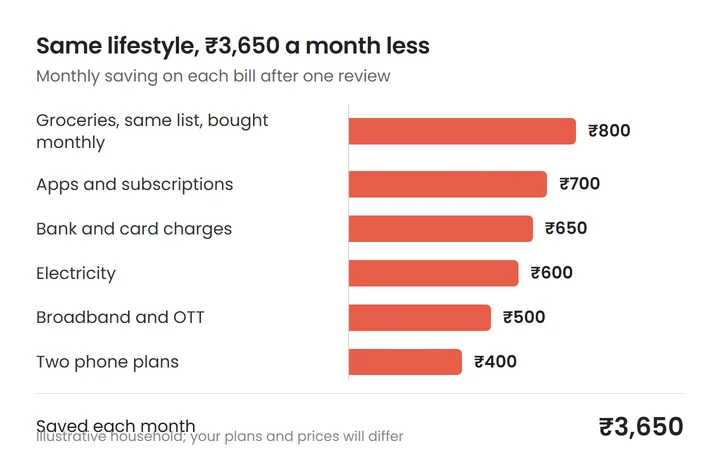
What the numbers can look like
| Bill (illustrative) | Before | After | What changed |
|---|---|---|---|
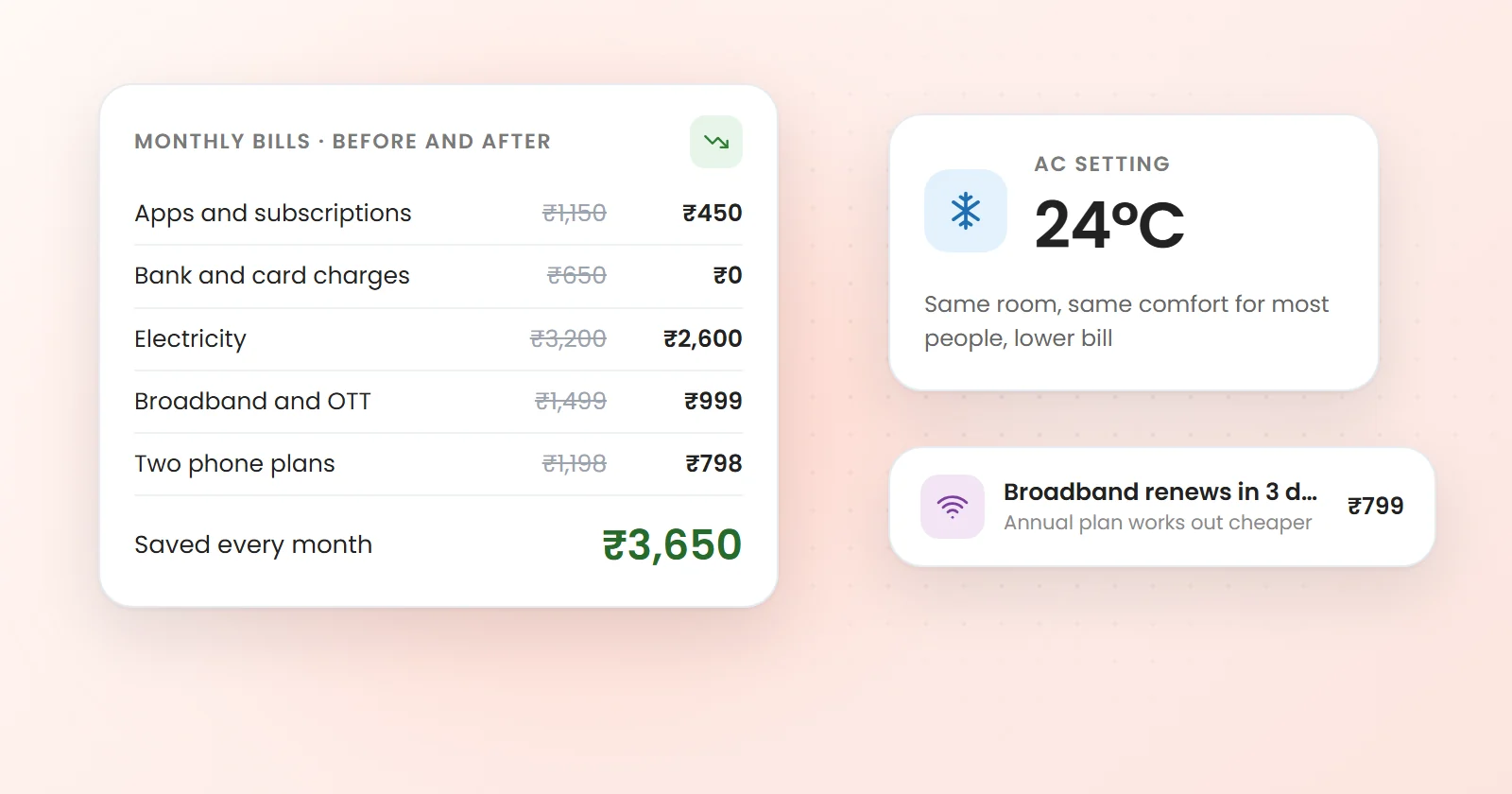
| Two phone plans | ₹1,198 | ₹798 | Plans sized to actual data use |
| Broadband and OTT | ₹1,499 | ₹999 | Plan including the services already watched |
| Electricity | ₹3,200 | ₹2,600 | AC at 24°C, geyser timer, servicing |
| Apps and subscriptions | ₹1,150 | ₹450 | Rotated streaming, cancelled unused apps |
| Bank and card charges | ₹650 | ₹0 | Closed a low-use account, paid card in full |
| Groceries | ₹7,800 | ₹7,000 | Same list, staples bought monthly |
| Total | ₹15,497 | ₹11,847 | ₹3,650 a month, ₹43,800 a year |
What not to cut
Some costs look like easy savings and aren't:
- Health insurance, or term cover if people depend on your income.
- Your emergency fund contribution. Lower bills should add to it, not replace it.
- Preventive maintenance on vehicles and appliances, which usually costs less than repairs.
- Things you genuinely value. If a subscription gets used every day, it's not the problem.
Make it a yearly habit, one bill at a time
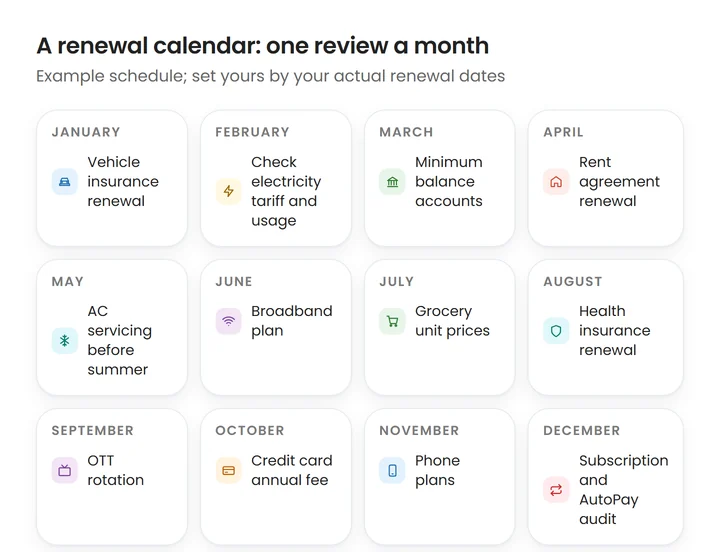
A full review of every bill is a weekend nobody schedules. One bill a month is ten minutes. Note each renewal date and review that bill the month before it renews.
The bottom line
You can reduce monthly expenses substantially without changing how you live, by paying less for the same things: plans sized to your use, annual pricing, fewer fees, and renewals you review rather than accept. Once fixed costs are lean, the next step is looking for spending that isn't earning its place; how to find and cut unnecessary expenses covers that, and 15 ways to save money every month puts the savings to work.
Frequently asked questions
What is the fastest way to reduce monthly expenses?
List your recurring charges and remove the ones that give you nothing back: fees, unused subscriptions and forgotten mandates. These take minutes to fix and don't change your lifestyle at all.
How can I reduce my electricity bill in summer?
Set the AC to 24°C and use a fan with it, service the AC before summer, keep doors and windows closed while it runs, use a timer on the geyser, and switch off standby loads at the plug.
Is it cheaper to pay insurance premiums annually?
Often, yes. Many policies cost more in total when paid monthly or quarterly than with one annual payment. Check your policy's premium options, and set aside a monthly amount so the annual payment doesn't hurt.
Which expenses should I never cut to save money?
Adequate health insurance, term cover if others depend on you, emergency fund contributions, and preventive maintenance. Cutting these tends to cost more later.