Daily Expense Tracking: Why Small Purchases Can Destroy Your Budget
Big purchases get thought about. A ₹60 chai, a ₹90 auto and a ₹205 quick-commerce top-up don't, which is exactly why they're where budgets quietly break.
In this article
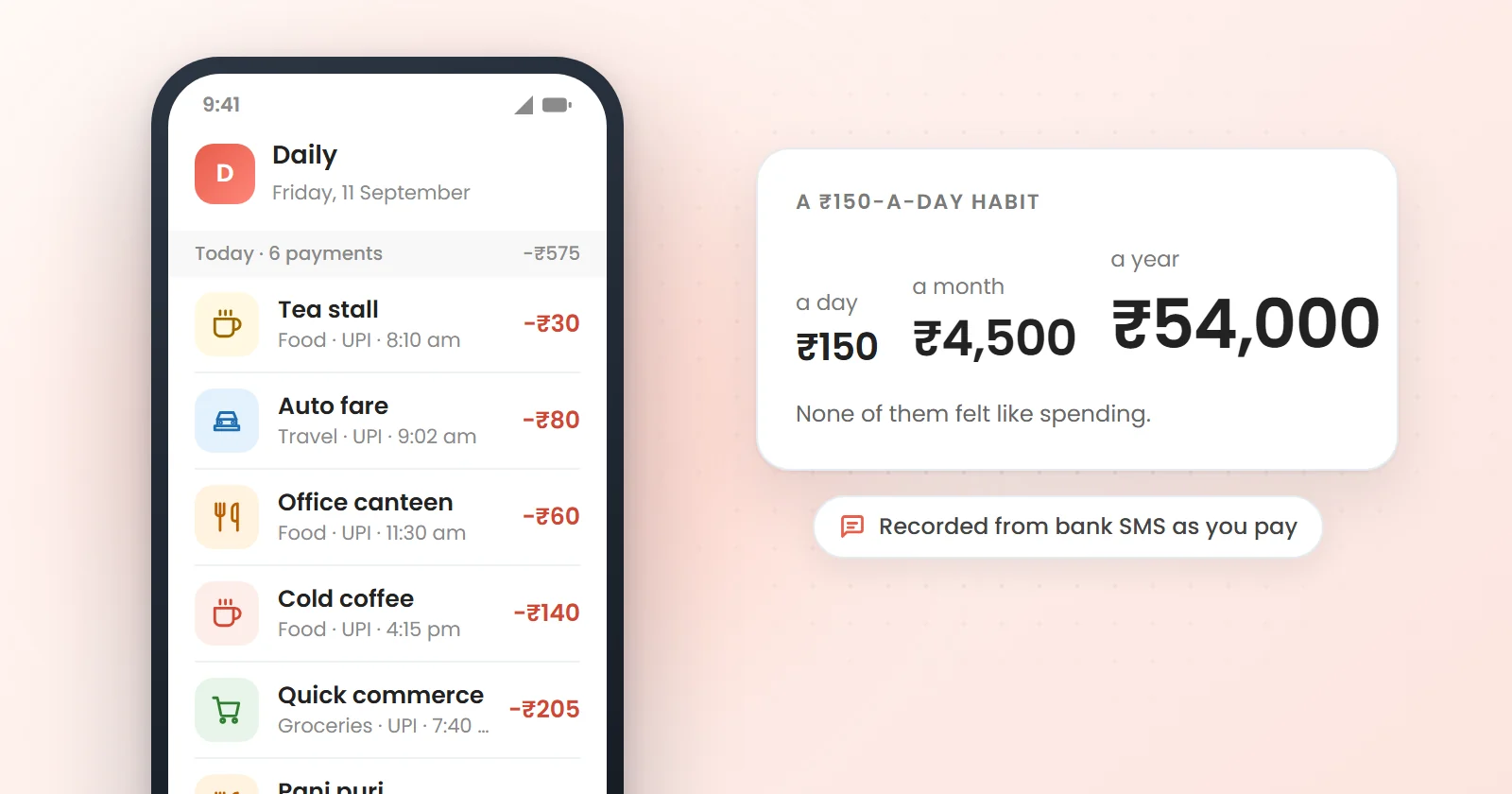
Here's a normal Friday: ₹30 for tea on the way in, ₹80 for an auto, ₹60 at the canteen, ₹140 for a cold coffee at four, a ₹205 quick-commerce order in the evening, ₹60 for pani puri on the walk home.
That's ₹575, and not one of those payments felt like a decision. There was no moment of "should I?" because each amount was below the level where your brain registers spending at all. Do that most days and your budget breaks without a single big purchase to blame.
- Small purchases add up because they repeat, not because they're large.
- UPI makes them frictionless, so they rarely register as spending.
- Tracking them daily takes two minutes if capture is automatic.
- A simple daily limit, with rollover, keeps them in check without banning anything.
The maths of small purchases
Take a ₹150-a-day habit, which is easy to reach with tea, snacks and a short auto ride:
₹54,000 is a family holiday, a good chunk of an emergency fund, or several months of rent in many cities. And ₹150 a day is a modest estimate for people who pay for most things by UPI.
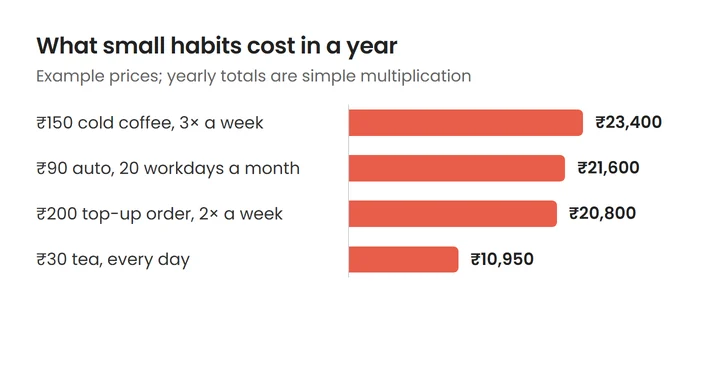
None of this means you should give up tea. It means small purchases deserve the same visibility as big ones, because together they often are a big one.
Why small purchases escape your budget
- They're below the pain threshold. Nobody deliberates over ₹60. The decision is automatic.
- UPI removes friction. Scanning a QR code takes seconds and there's no cash leaving your wallet to notice.
- They aren't memorable. Ask someone what they spent last Tuesday and they'll remember the ₹2,000 dinner, not the six ₹80 payments.
- Each one feels like an exception. "It's just today" is true every day.
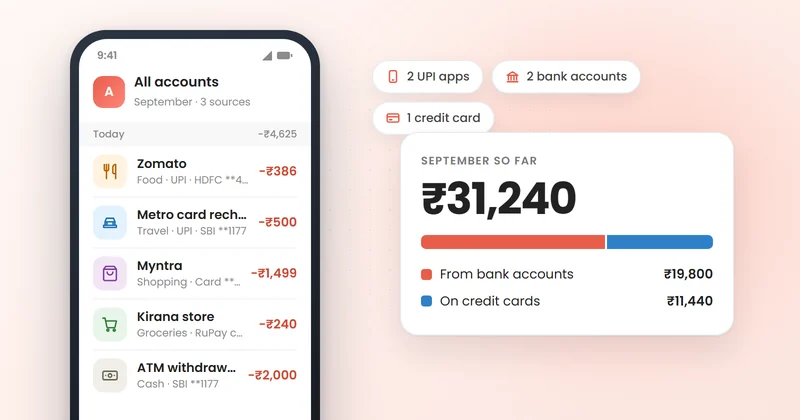
- They're scattered. Across two UPI apps, a card and some cash, no single place shows the total.
Where small spends hide in a typical month
| Small spend (example) | Typical amount | Times a month | Monthly total |
|---|---|---|---|
| Tea or coffee | ₹40 | 22 | ₹880 |
| Snacks | ₹80 | 15 | ₹1,200 |
| Autos and short cab rides | ₹90 | 18 | ₹1,620 |
| Quick-commerce top-up orders | ₹220 | 8 | ₹1,760 |
| Delivery and platform fees | ₹45 | 10 | ₹450 |
| Small app purchases and top-ups | ₹99 | 3 | ₹297 |
| Total | ₹6,207 |
Illustrative figures. Replace them with your own from one month of tracking.
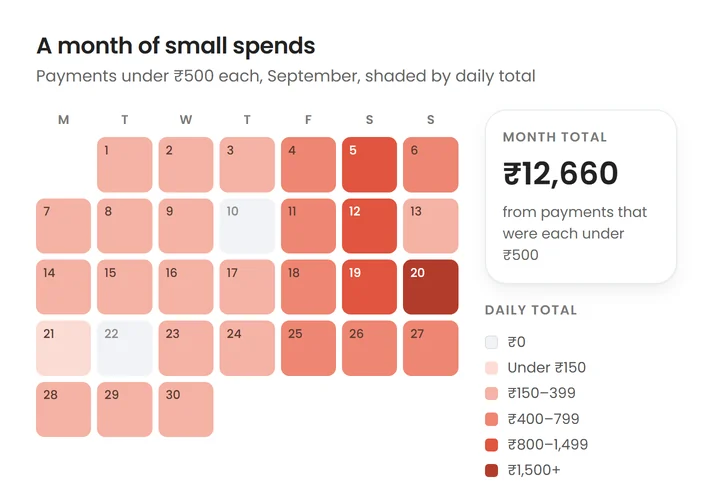
Over ₹6,000 a month from payments that were all under ₹250. On a ₹40,000 take-home, that's about 15% of income.
How to track daily expenses in two minutes a day
Automate what you can
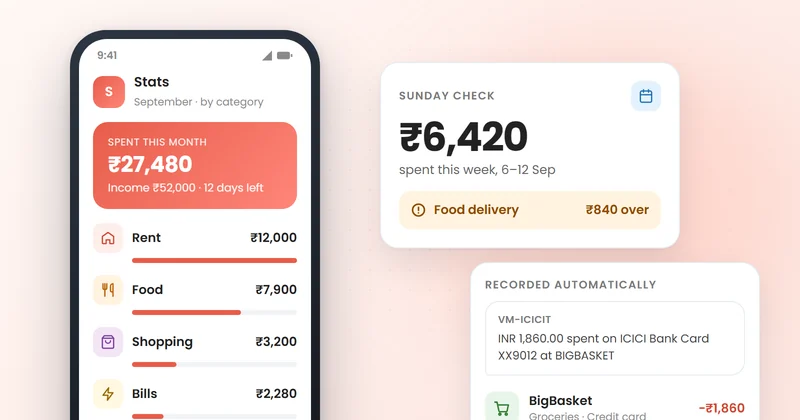
Use a tracker that records UPI and card payments from your bank's SMS, so small payments are captured without you remembering them. Here's how that works.
Add cash the same day
Cash is the one thing automation can't see. A few seconds each evening is enough.
Glance at today's total
Before bed, look at one number: what today cost. Not every entry, just the total.
Notice repeats, not individual items
The useful pattern is "cold coffee four times this week", not "₹140 on Thursday".
Roll it up weekly
Every Sunday, compare the week against your budget. Our guide on how to track expenses describes the weekly check.
Set a daily spending limit that isn't miserable
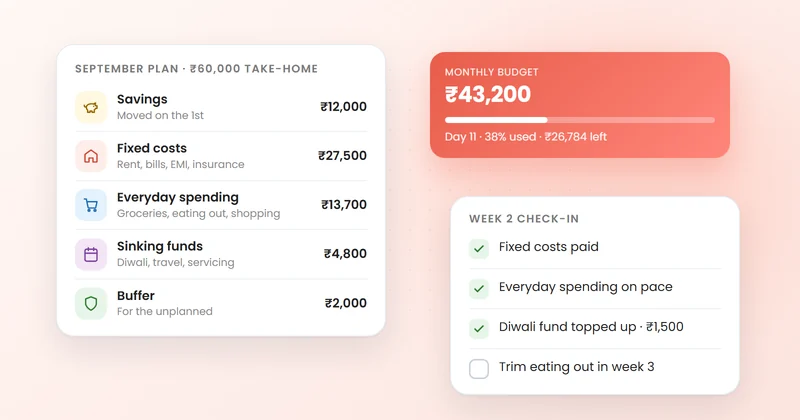
A daily limit works because it turns a vague monthly number into a decision you can make at 4 pm. Here's how to set one:
Anything unspent rolls into tomorrow. A ₹120 Tuesday means a ₹480 Wednesday is still on track.
Three rules keep it humane:
- Roll over what you don't spend. It rewards quiet days instead of resetting to zero.
- Allow a weekend bump. If Saturdays are social, plan ₹600 for them and ₹250 on weekdays.
- Don't carry debt forward. One overspent day is information, not a penalty for the rest of the week.
If you don't have a monthly budget yet, start there: how to create a monthly budget you can actually follow gives you the flexible number to divide.
Keep the small things that are worth it
The goal isn't to strip joy out of your day. It's to choose. Once you can see that a daily cold coffee costs about ₹23,000 a year, you might decide it's worth every rupee, and drop the quick-commerce top-ups instead. Tracking small purchases turns habits into choices. For more on building those choices into routines, see 10 money habits that help you save more.
The bottom line
Small purchases destroy budgets through repetition and invisibility, not size. Make them visible with daily tracking, give yourself a daily number with rollover, and keep the habits you'd happily pay for over a year. Much of that spending happens on UPI, so the natural next step is managing UPI and card spending without losing track.
Frequently asked questions
Is it worth tracking small expenses?
Yes. Individually they don't matter, but they repeat, and for many people they add up to several thousand rupees a month. Tracking them is also low effort if payments are captured automatically.
What is a good daily spending limit?
There's no universal number. Subtract savings, fixed costs and planned bigger spends from your take-home pay, then divide what's left by the days in the month. Let unspent amounts roll into the next day.
How do I track small cash expenses?
Add them on the same day, ideally each evening. If most of your small spending is cash, a notes app or a quick manual entry in your tracker works well.
Why does my money disappear when I pay by UPI?
Because UPI removes the friction that used to make spending noticeable. Payments are quick, small and spread across apps. Tracking them in one place and reviewing weekly restores the feedback cash used to give.